
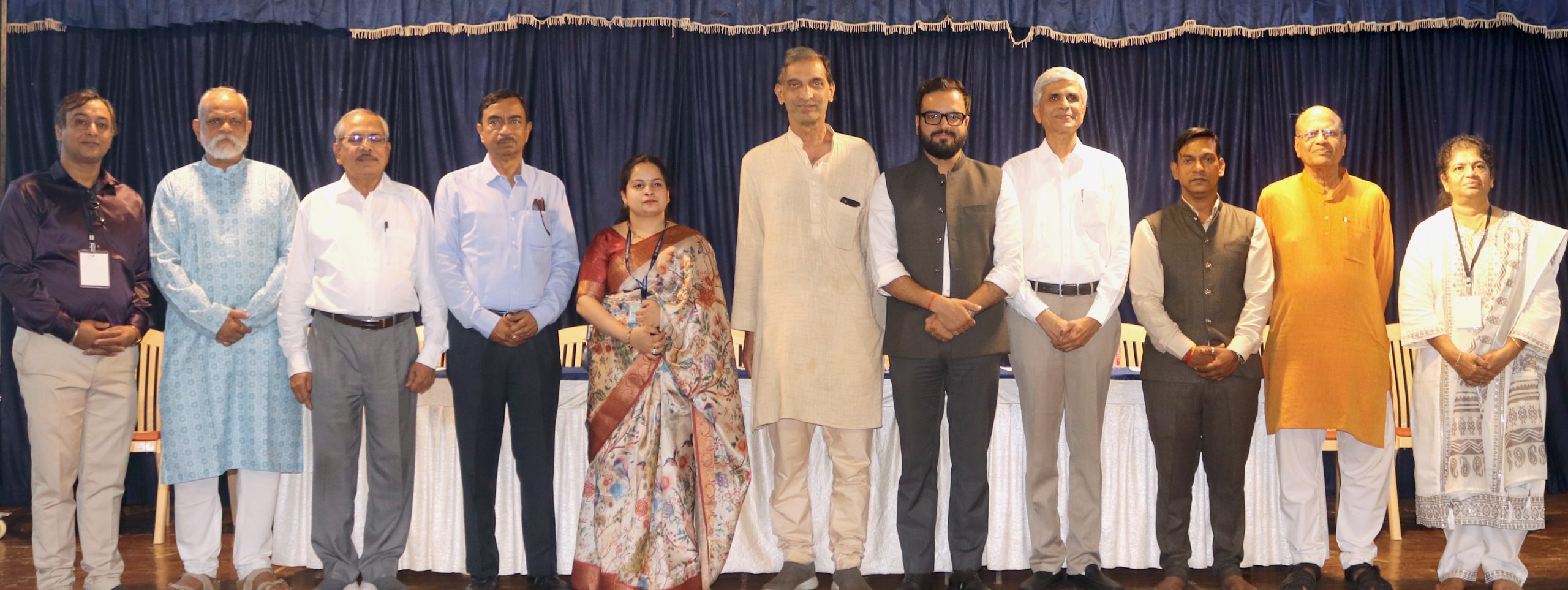

Pune: Jnana Prabodhini, on Thursday, inaugurated the Atal Community Innovation Centre (ACIC) at its Nigadi campus, a first-of-its-kind facility in Pune supported by NITI Aayog’s Atal Innovation Mission (AIM), to promote grassroots innovation, rural entrepreneurship, and community-led development.
The centre was inaugurated by Maharashtra Knowledge Corporation Ltd (MKCL) founder-director Vivek Sawant in the presence of AIM officials Ashish Pandey and Deepakshi Jindal, Desai Brothers Ltd CEO Umesh Parekh, CSR head Dr Chandrakant Rawal, Jnana Prabodhini trustee Subhash Deshpande, Nigdi centre head Manoj Deolekar, ACIC founding directors Yashwant Limaye and Sangeeta Kulkarni, and chief innovation officer Omkar Gurjar.
Addressing the gathering, Sawant said innovation must go beyond technology and become inclusive and community-centric if India is to achieve sustainable economic growth. “India’s demographic strength and local challenges provide immense opportunities for social innovation. When education, industry, and research institutions work together to solve real-life problems, they create employment, entrepreneurship, and long-term economic value,” he said.
Pandey said the ACIC is Pune’s first centre under the Atal Innovation Mission and among nearly 25 such centres in the country. He said Jnana Prabodhini’s long-standing engagement with farmers, self-help groups, rural communities, and local entrepreneurs made it an ideal institution to host the facility. “We aim to develop this into one of the country’s leading community innovation centres,” he said.
Deepakshi Jindal said the centre would serve as a model for community-led innovation in Maharashtra by supporting grassroots innovators, startups, women entrepreneurs, SHGs, and farmer-producer organisations through mentoring, incubation, technology support, industry linkages, and access to funding.
According to the organisers, the ACIC will focus on sectors including bamboo-based industries, agriculture and agri-biotechnology, medicinal plants, food processing, nutraceuticals, renewable energy, women’s entrepreneurship, rural industries and social innovation, while also fostering scientific thinking and entrepreneurial skills among school students.

Comments are closed.