
Robust public health inevitable to realising India’s economic vision: Experts at AED 2026
Pune (Voice news service):- The Asia Economic Dialogue 2025, the annual geoeconomics conference organised jointly by the Ministry of External Affairs (MEA) and Pune International Centre (PIC), kicked off in Pune on Thursday, February 26, 2026.Themed ‘Geoeconomics Beyond Globalisation: Tariffs, Technologies and Strategic Alignments,’ this is the 7th edition of the AED jointly organised by the MEA and PIC. The 3-day, 12-session international conference brings together more than 45 speakers, including academicians, policymakers, and industry experts from nine countries—India, Bhutan, Sri Lanka, Taiwan, Singapore, Kenya, Australia, Israel, and Norway, facilitating an exchange of transformative ideas and strategies.

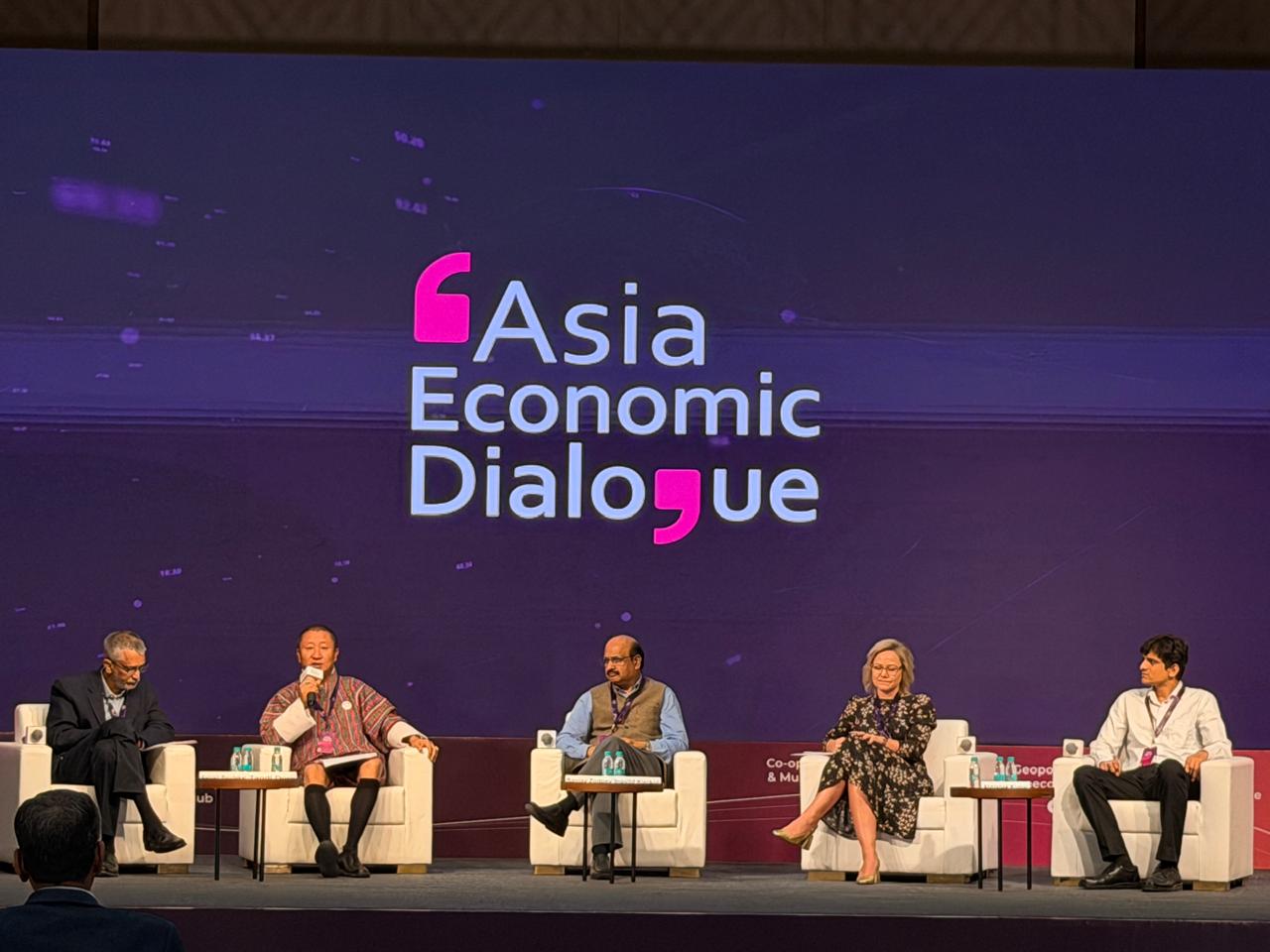
For the first time, the Asia Economic Dialogue (AED) placed public health at the heart of its economic discussions, with a powerful session on “Connecting Public Health and Economic Development”
On day 2, underscoring that India’s growth ambitions cannot be achieved without strong health foundations.
Chaired by Dr. Ashish Bavdekar, Head of Pediatrics, KEM Hospital, Pune, the panel brought together Dr. Tandi Dorji, former Foreign Minister of Bhutan; Prof. Sanjay Zodpey, President of the Public Health Foundation of India; Ingvild Kjerkol, former Health Minister of Norway; and Dr. Abhishek Kumar of FLAME University.
Opening the discussion, Dr. Bavdekar drew a clear distinction between healthcare and public health. He emphasised that building hospitals and hiring doctors, though important, does not by itself constitute public health. True public health involves strengthening primary care, ensuring safe water and nutrition, addressing environmental risks, and promoting equity across socio-economic and geographic divides. He also drew a distinction between economic growth, measured by GDP expansion, and economic development, which includes broader indicators such as health, education, and quality of life. Despite India’s remarkable economic rise in recent years, he noted that improvements in population-level health indicators have not kept pace, pointing to a structural disconnect that demands policy attention. Public health is not an expenditure; it is an investment in human capital, he added.
Prof. Zodpey highlighted the virtuous cycle between health and growth. “When we create one job in the health sector, three to four additional jobs are generated across the economy,” he noted, arguing that public investment in primary care and prevention is essential to sustainable development. He stressed that strengthening primary healthcare and addressing broader determinants such as air pollution, sanitation, and living conditions would deliver far greater economic and social returns than focusing disproportionately on tertiary care.
Dr. Abhishek Kumar stressed productivity and demographic urgency. “An unhealthy workforce cannot sustain economic momentum,” he said, cautioning that high out-of-pocket medical expenses divert household savings away from opportunity and investment.
Drawing on Bhutan’s experience, Dr. Dorji said constitutional guarantees for healthcare reinforce equity and resilience. From Norway’s perspective, Kjerkol emphasised trust: “Health is not a sector on the side of the economy — it is the foundation beneath it.”
The session concluded with a shared message: if India aspires to sustained, inclusive growth, investing in robust public health systems is not optional — it is indispensable.
On Day 3, the focus of panel discussions will be Global Trade and Maritime Geoeconomics in the Indian Ocean Region.

Comments are closed.