
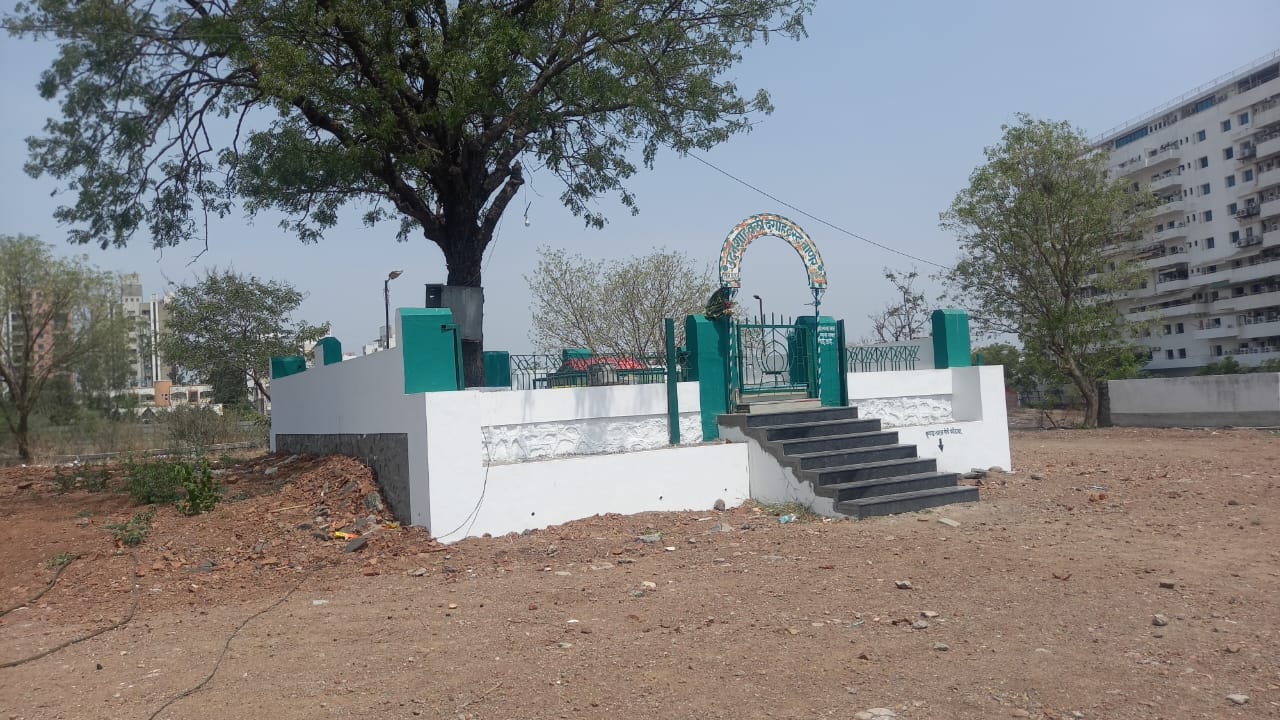
Waqf Board revokes 2006 sale permission of Baner Masjid land, restores protection to 18-acre community property
Maharashtra State Waqf Board's new CEO Faiyyaz Khan cancels the two-decade-old permission to sell 7H 34R waqf land at Survey No. 99/1, Baner, Pune — worth over ₹900 crore — in a move welcomed by civic activists as a step towards safeguarding public and community properties.

PUNE: The Maharashtra State Waqf Board has revoked the 2006 permission to sell prime waqf land at Survey No. 99/1, Village Baner, Taluka Haveli, Pune, on which stands the historic Hazrat Udan Shah Wali Dargah and Baner Masjid. The revocation order was issued by the Board’s newly appointed Chief Executive Officer (CEO), Faiyyaz Khan.
The land, admeasuring 7 Hectares 34 R (approximately 18 acres), had been permitted for sale in 2006 for ₹9.51 crore — a valuation that bears no relation to its present market worth, estimated at over ₹900 crore. The property has been treated as a religious endowment since a grant by the then Governor of Bombay under Order No. 986 dated August 12, 1870. It was subsequently registered as a waqf under Certificate No. MSBW/REG-95/4872/05 following the coming into force of the Waqf Act, 1995.
How the controversy unfolded
The chain of events began in 2005, when an application was moved by the then alleged mutawalli, Razzak Lalbhai Sayyed, seeking permission to alienate the land.
On September 29, 2006, the then chairman of the Board issued an order permitting the sale to Respondent No. 4, Pancea Hill Co-operative Housing Society, for ₹9.51 crore, of which ₹7 crore was to be paid to the Board. That amount was never received.
The sale deed was eventually executed on October 31, 2009 — well beyond the 36-month validity of the 2006 permission. The Board subsequently cancelled the transaction in 2009. The matter remained entangled in litigation and administrative proceedings for nearly two decades.
The controversy resurfaced in 2025 when the then CEO, Juned Sayyed, issued a letter on May 27, 2025, directing revenue authorities to remove all restrictions on the land.
Acting on the letter, land records were updated on July 2, 2025, reclassifying the property from Inam Class III / Occupant Class II to Occupant Class I (freehold private property). The record change, coupled with the fact that it effectively revived a transaction cancelled 16 years earlier at an outdated price, drew criticism from legal experts, activists and community representatives.
Grounds for revocation
The order issued by CEO Faiyyaz Khan, revoking the 2006 sale permission, rests on several legal and procedural infirmities that had been flagged over the years:
• Absence of a mandatory Board resolution under Section 51 read with Section 32(2)(j) of the Waqf Act, 1995, which requires approval by a two-thirds majority of the Board’s members for alienation of waqf property.
• No public auction or competitive bidding, as required under Section 51(2) of the Act.
• A defective and outdated valuation report, which allegedly grossly undervalued a prime property in one of Pune’s fastest-growing corridors.
• A forged or invalid CEO order dated November 3, 2006, allegedly issued in the name of an officer who had already been transferred and was not in charge at the time.
• Execution of the sale deed beyond the 36-month deadline, rendering it void on that ground, according to the grounds cited for revocation.
• Material evidence of fraud, suppression of facts and misrepresentation surrounding the original transaction and the recording of the property’s waqf status.
Legal observers note that the revocation is consistent with the Supreme Court’s holding in A.V. Papayya Sastry v. Government of A.P., (2007) 4 SCC 22, that an order obtained by fraud is a nullity.
Civic activists welcome decision
The revocation has been welcomed by social workers, legal advocates and civic groups who have been working for years to protect community and public properties in Pune district.
“This order restores the fundamental principle that waqf and public properties are not commodities to be traded away at throwaway prices,” one activist said. “It is a victory not for any individual, but for the community and for the rule of law.”
The activists also highlighted that Adv. Sameer Shaikh, a Pune-based advocate and long-time campaigner for waqf rights, has welcomed the decision. He has called upon advocates, social workers, journalists and media professionals across Maharashtra to come forward and join hands in a coordinated effort to protect and defend public and community properties from illegal alienation, undervaluation and administrative irregularities.
“Today’s order is not the end — it is a beginning,” Shaikh said. “We must now build a strong, coordinated movement where every lawyer, journalist and concerned citizen takes responsibility to monitor, expose and challenge any attempt to undermine public trust in our sacred and shared spaces.”
He said the issue was not limited to one land parcel but concerned the integrity of institutions, laws and community heritage.
A larger pattern, not an isolated case
Those tracking waqf administration in Maharashtra said the Baner Masjid case should not be viewed in isolation. They pointed to a broader pattern in which community and religious properties are allegedly sought to be alienated through methods including:
• Undervalued pricing based on valuations fixed years ago and not revised.
• Procedural shortcuts, including bypassing mandatory Board resolutions, public auctions and independent valuations.
• Forged or improperly issued orders bearing the names of officers who were not in charge.
• Abrupt changes to revenue records without notice to affected communities.
• Executive action reviving transactions that the Board had itself cancelled, including in cases where litigation was pending.
What must follow
While welcoming the revocation, social workers and civic groups have urged the Board to take the decision to its logical conclusion. Their demands include:
1. Immediate reversal of the July 2, 2025, record changes, restoring the land’s status as waqf / Inam Class III property.
2. Status quo on possession and development until all connected proceedings are finally decided.
3. An independent judicial inquiry into the events between May and July 2025, including the role of officials involved.
4. Departmental and criminal action against those responsible for facilitating the alleged unlawful conversion.
5. Institutional safeguards, including mandatory online publication of all Section 51 applications, public hearings and independent government-approved valuations before any alienation is considered.
6. Recognition of community stakeholders in decisions affecting waqf and public properties.
Conclusion: The revocation of the 2006 sale permission for the Baner Masjid land marks a reaffirmation of the protective provisions of the Waqf Act, 1995, and the principle that properties held in trust for the community cannot be alienated without following the law.
For the historic dargah and mosque at Baner, and for those who regard the property as part of their heritage for more than a century and a half, the order provides relief.
The development also highlights the role of sustained advocacy by social workers, civic activists and citizens in raising questions over the management and protection of community properties.
As Adv. Sameer Shaikh said:”Let us stand together — not as individuals, but as a united front — to protect what belongs to all.”

Comments are closed.