
Sugar industry must evolve into a ‘multiproduct biomass resource’: Jayant Patil
Advanced technology, AI and efficiency enhancement need to be prioritised, says former minister at 71st annual convention of Deccan Sugar Technologies Association

Pune (Voice news service):- The sugar industry needs to move beyond conventional sugar production and evolve into a “multiproduct biomass resource” by expanding into ethanol, biogas, bio-CNG and other value-added products to improve its economic viability, former state home and finance minister Jayant Patil said on Friday.
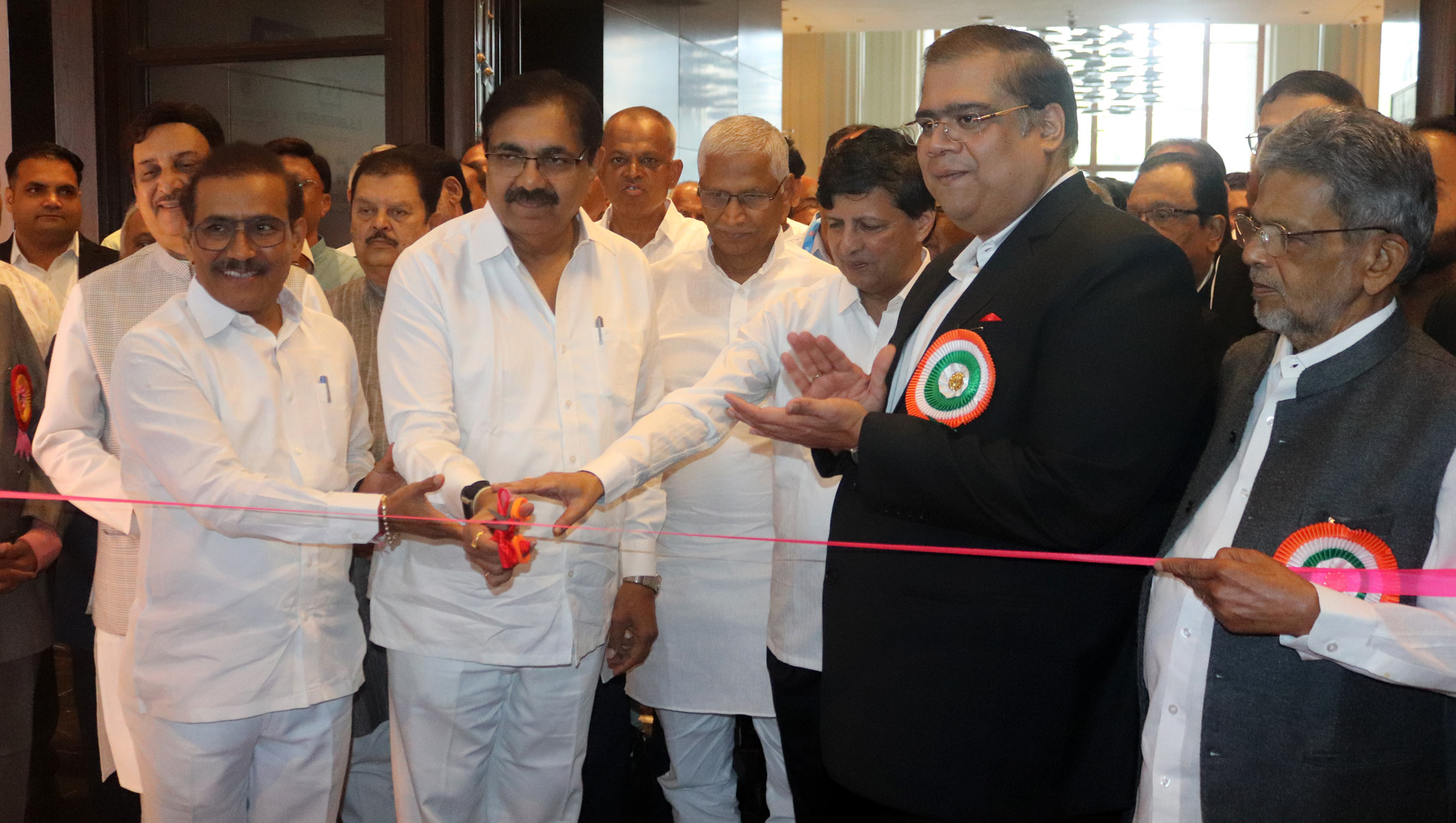
Speaking at the 71st annual convention of the Deccan Sugar Technologies Association (DSTA) and the inauguration of the sugar exhibition at JW Marriott on Senapati Bapat Road, Patil stressed the need for the industry to embrace artificial intelligence and other advanced technologies to improve operational efficiency. Former minister Rajesh Tope and Dilip Deshmukh, state Sugar Commissioner Dr Sanjay Kolte, former IAS officer Dr Shekhar Gaikwad, former Karnataka minister Shrimant Patil, West Indian Sugar Mills Association president B. B. Thombre, South Indian Sugarcane and Sugar Technology Association president R. V. Kumbhar, DSTA president Sohan Shirgaonkar, Maharashtra vice-president S. D. Bokhare, Gujarat vice-president Mansingh Patel, Karnataka vice-president C. G. Mane, S. S. Engineers chairman S. B. Bhad, Vasantdada Sugar Institute director general Sambhaji Kadu Patil, Shri Datta Cooperative Sugar Factory director Ganpatrao Patil, Krishna Group head Dr Suresh Bhosale, among others, were present.
“The sugar industry should not be viewed merely as an industry producing sugar. It needs to be looked at as a multiproduct biomass resource. Ethanol, biogas, bio-CNG and other value-added products can help improve the economic viability of the industry. There is a need to adopt modern technologies such as artificial intelligence and give greater emphasis to improving efficiency,” Patil said.
He said the sugar industry was like one large family and DSTA had made a significant contribution to its progress through technology, research and technical guidance. Patil said the industry was currently facing several challenges, including market fluctuations, changing consumer expectations and increasing price competition. “Sugar factories earlier operated for six months. Subsequently, the crushing season came down to 90 to 100 days, and now many factories operate for only around three months. This has affected their economic viability,” he said.
While sugar industries in several countries are rapidly adopting modern technologies, the Indian industry too needs to adapt to the changing circumstances, he said. Research being undertaken at the Vasantdada Sugar Institute should be increasingly translated into practical applications at sugar factories, Patil added. He stressed the need to expand the use of artificial intelligence, predictive maintenance, modern boiler technology and digital monitoring in sugar factories. Such technologies, he said, could help the industry improve efficiency and respond better to emerging operational challenges.
Patil also pointed to the growing health consciousness among consumers as a future challenge for the sugar industry. The increasing perception that “sugar should not be consumed” and growing awareness about the glycemic index and healthy diets could influence consumer demand, he said. The Indian sugar industry should study modern technologies and practices adopted in countries such as Australia, Brazil and South Africa and incorporate suitable practices, Patil said. The industry should also diversify into products such as ethanol, biogas and bio-CNG to create new sources of revenue.
“There is also a need to bring the younger generation into the sugar industry and give them opportunities in technology, research and innovation. Improving efficiency and preparing the industry for future challenges must remain a priority,” he said.
In his introductory remarks, DSTA president Sohan Shirgaonkar said the association had been playing an important role in promoting technological advancement, research and modern technology in the sugar industry.
“DSTA has consistently worked to facilitate discussions on the technical and industrial challenges faced by sugar factories and to take information about modern technologies and practices from India and abroad to various stakeholders in the industry. The association is focused on strengthening coordination among sugar factories, experts, engineers and research institutions to make the industry more efficient, competitive and technology-driven,” Shirgaonkar said.
Several awards were presented during the convention to recognise contributions to the sugar industry. The Sugar Industry Gaurav Awards were presented to S. B. Bhad, chairman of S. S. Engineers; former minister Rajesh Tope; Mansinghbhai Patel of the Gujarat Sugar Association; Dr Suresh Bhosale; and Karnataka MLA Shrimant Patil. The Outstanding Sugar Factory Awards were presented to Godavari Biorefineries Ltd, Vilas Cooperative Sugar Factory, Jarandeshwar Sugar Mills Pvt Ltd, and Vikasratna Vilasrao Deshmukh Manjara Cooperative Sugar Factory.
The Industrial Excellence Awards were presented to Sharad Gore of Meru Industries, Sandeepa Kanitkar of Can Biosys, Anup Keserwani of Chemical System, TKIL Industries, and Ajit Chavan of Swajit Engineering. The Technical Excellence Awards were presented to Subodh Joshi, Pramodkumar Belsare and Shripad Gangawati. The Senior Member Awards for members above 90 years of age were presented to Yashwantrao Gharpure, Mansingrao Jadhav and P. N. Rao. The Lifetime Achievement Awards were presented to Balaji Pabshetwar, Dr Swen, Ramesh Gangai, R. S. Kulkarni and R. B. Mane. The DSTA Exceptional Service Awards were presented to M. R. Kulkarni, S. B. Dev, Jagdish Kulkarni, Dr S. M. Pawar and S. D. Borude. The Best Research Paper Awards were presented to S. S. Hegana, Rajendra Bhilare, Narayan Mehana, Dr M. B. Londhe, T. M. Karne and R. B. Patil.
The souvenir of the 71st annual convention was also released on the occasion. Shobha Kulkarni conducted the proceedings, while S. D. Bokhare proposed the vote of thanks.

Comments are closed.