
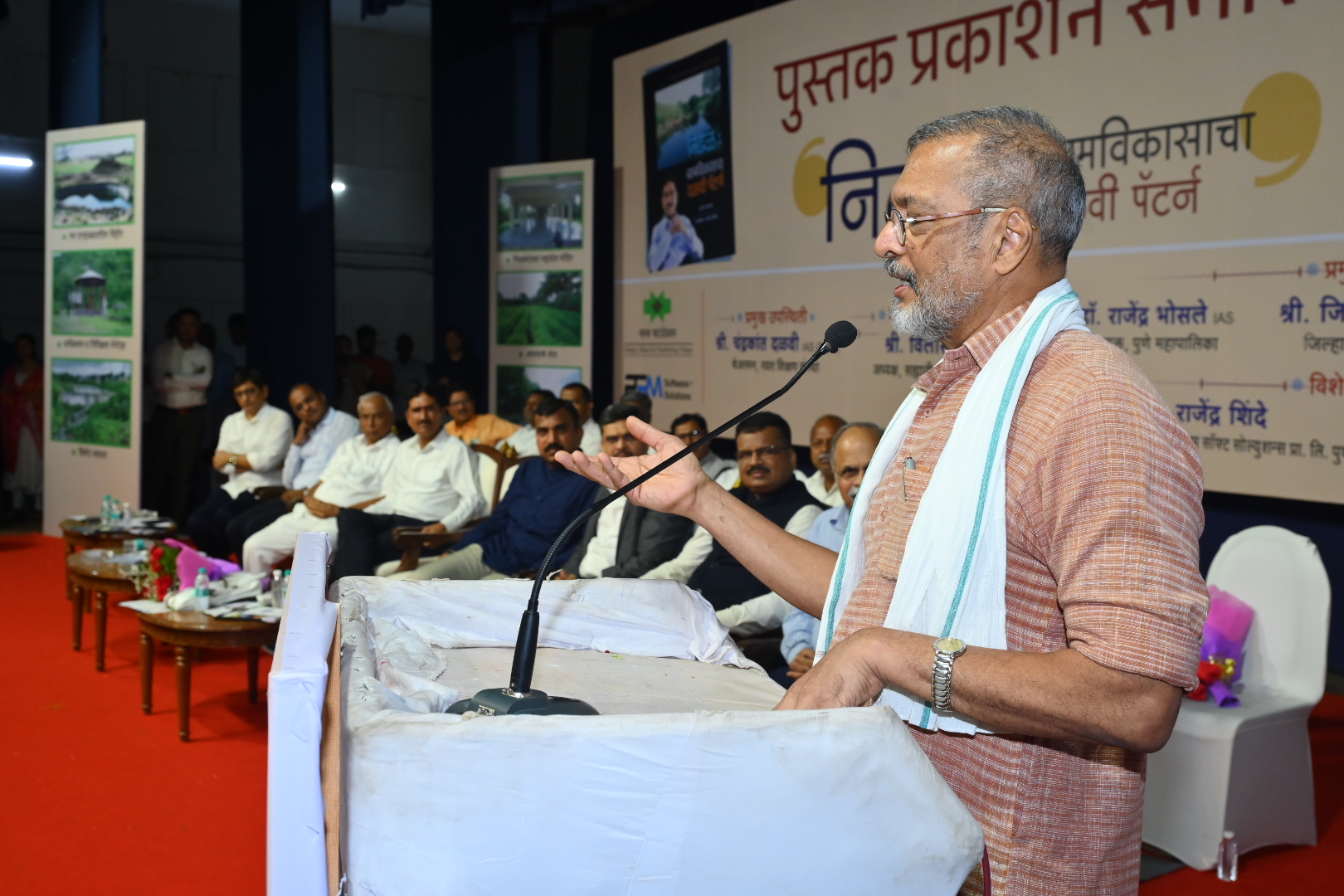

Pune: Veteran actor and Naam Foundation President Nana Patekar on Saturday called for the inclusion of the ‘Dalvi Pattern’ of rural development in academic curricula, stating that the model offers a replicable and inspiring framework for holistic village transformation.
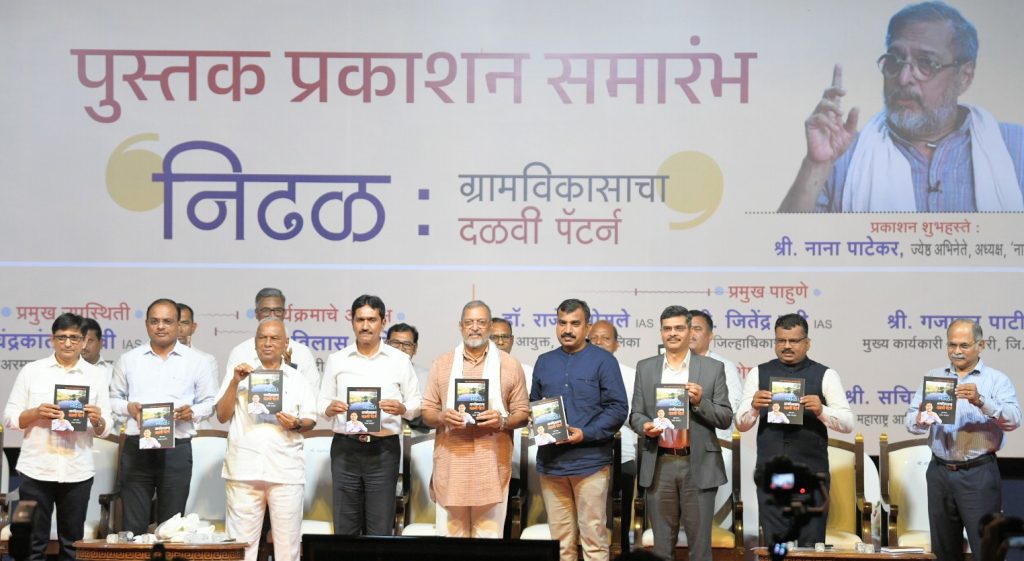
“The ideal model of village development created by Chandrakant Dalvi should not be limited to a village, taluka, or district. It should reach across the country and become part of formal learning so that future generations are inspired to work in rural development,” Patekar said. He was speaking at the launch of the book Nidhal: Gramvikasacha Dalvi Pattern, authored by Sunil Chavan and published by Sattva Foundation.
The book documents the transformation of Nidhal village in Satara district under the leadership of former IAS officer and Rayat Shikshan Sanstha Chairman Chandrakant Dalvi, who implemented a participatory and sustainable development model, now widely known as the ‘Dalvi Pattern’.
Vilas Shinde, Chairman of Sahyadri Farmers Producers Company, presided over the function. Also present were Pune ZP CEO Gajanan Patil, former MP Ramsheth Thakur, PRM Soft Solutions Executive Director Rajendra Shinde, Abhishek Dalvi, Dharmendra Pawar, and several other dignitaries. The teaser and poster of the documentary Nidhal: The Journey of Transformation, directed by Shankar Barve, were also unveiled.
Speaking on the occasion, Nana Patekar said, “Chandrakant Dalvi has worked consistently for 41 years. He held influential government posts where traditional development could have been easily implemented. Yet, he chose a path of grassroots involvement. With over 90% support from government schemes, and the rest through community participation and public contributions, he has created a development model rooted in unity.”
He added, “Harnessing the energy of youth in the right direction is essential. This book must be part of the syllabus to ensure the next generation understands the essence of participative rural development. Naam Foundation will collaborate with Dalvi’s model for its rural work.”
Calling Nana Patekar “a true hero working for rural India,” Chandrakant Dalvi reflected on his administrative career: “While I had the opportunity to contribute to state policies from various posts, implementing development at the grassroots was the real challenge. Nidhal is a live example of what’s possible when good policies are supported by people’s participation.”
Vilas Shinde noted that rural distress and migration stem from a lack of opportunities. “This book offers solutions for systemic changes to reverse that trend,” he said.
ZP CEO Gajanan Patil added, “Consistency and connection with the community are crucial for working in villages. Dalvi has shown how to bring stakeholders together to achieve long-term results.”
Former MP Ramsheth Thakur said, “If adopted widely, the Dalvi Pattern can stem the tide of urban migration and become a nationwide model.”
Author Sunil Chavan said the book is a comprehensive documentation of rural development that will serve as a guiding document in the years ahead.
Others who shared their views included Kailas Kalmkar, Bhima Mane, Manoj Gaikwad, Ramdas Mane, Santosh Dhore-Patil, and Shankar Barve. The event was anchored by Sunil Joshi, and Sanjeev Kulgod proposed the vote of thanks.
